
Thai Train Classes: Sleepers, AC Seats & Third Class
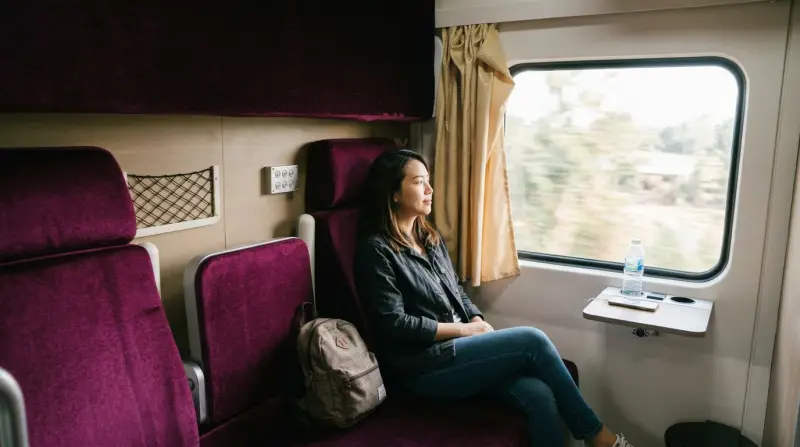
Thai train classes describe your accommodation, while labels such as Special Express, Express, Rapid and Ordinary describe the service. Check both. A second-class ticket may mean a seat or a sleeper, and a train may offer only some of the options below.
Compare the main accommodation types
| Accommodation | What you book | Main decision |
|---|---|---|
| First-class AC sleeper | A berth in a compartment, commonly arranged for two people | Check occupancy before expecting a private compartment |
| Second-class AC sleeper | An upper or lower berth in a shared carriage | Compare berth access, space and price |
| Second-class fan sleeper | A berth on services that offer fan accommodation | Confirm availability and your comfort with ambient temperatures |
| Second-class seat | Seated accommodation, with AC or fan according to the carriage | Check cooling and the total journey length |
| Third-class seat | Basic shared seating, commonly fan-cooled | Check reservation arrangements and suitability for a long journey |
Read the accommodation description carefully
The Thai government’s northern-route guide identifies first- and second-class sleepers on trains 9/10 and 13/14, and second-class air-conditioned seating on trains 7/8. This illustrates why the class number alone is not enough. Equipment and availability should still be checked for your date.
A first-class berth does not automatically buy the whole compartment. Confirm whether another passenger can occupy the second berth or whether an exclusive-use option is available. Second-class sleepers use an open carriage with individual curtained berths. Lower berths generally offer more width and a window; upper berths require climbing. See the first-class versus second-class sleeper comparison for that specific decision.
Choose a class around your itinerary
For a daytime trip, compare a reserved seat with the journey length, temperature and arrival time. For an overnight trip, a sleeper provides somewhere to lie down. There is no universal duration after which everyone needs a berth: mobility, sleep needs, budget and plans on arrival matter. Our seat-versus-sleeper guide covers those trade-offs.
Do not assume that every first-class carriage has a shower, every second-class seat reclines, or every berth has a power outlet. Toilets, catering, sockets and luggage space vary. Ask the booking channel about any essential access or equipment requirement before paying.
Luggage and boarding checks
SRT’s published general free baggage allowances are 50 kg in first class, 40 kg in second and 30 kg in third; service-specific exceptions apply. A weight allowance does not guarantee that a suitcase fits beneath a berth. Keep aisles and doors clear and follow staff directions. Read the luggage guide before travelling with large bags or a bicycle.
Check the complete departure station, train number, class, berth or seat, passenger name and ticket instructions. Many long-distance services use Krung Thep Aphiwat, but Bangkok has several railway terminals. Review the total price and change or cancellation conditions before payment.
Check availability and official rules
Advance booking can extend up to 180 days for eligible journeys under the government’s published SRT booking policy; train and journey conditions apply. Check your date through official SRT D-Ticket or your chosen channel. ThailandTrain.org is an independent booking service. Search available trains and accommodation to compare the options actually offered.