
Thailand Train Travel Guide: Routes, Classes & Booking
Plan and book this journey
Traveling by train in Thailand is one of the most rewarding ways to experience the country. From the bustling capital of Bangkok to the ancient temples of Chiang Mai, the historic bridge over the River Kwai, and the sun-drenched coastline of southern Thailand, the railway connects you to destinations that define the Thai experience. For international visitors, understanding how the system works — from network layout to ticket booking — can turn a good trip into an unforgettable one.
This guide covers everything you need to know: the State Railway of Thailand network, the major route families, Bangkok's train terminals, the different classes of service, how to book tickets, and what to expect with luggage and boarding. Whether you are a first-time visitor or a seasoned traveler returning to explore deeper, this resource will help you navigate Thailand by rail with confidence.
Important note: ThailandTrain.org is an independent booking service and is not affiliated with, endorsed by, or connected to the State Railway of Thailand (SRT). We provide a convenient platform for searching and booking train tickets in Thailand. For the official SRT website, please visit the State Railway of Thailand directly.
The State Railway of Thailand Network
The State Railway of Thailand (SRT) operates the country's national rail network, which has been serving passengers and freight since the late 19th century. The network spans approximately 4,000 kilometers of track and covers four main line families that radiate from Bangkok outward to the north, northeast, south, and east.
Thailand's railway system uses meter gauge (1,000 mm) track, which is standard across much of Southeast Asia. While the trains are not high-speed by modern international standards, they offer something that no other mode of transport can match: a window into the Thai countryside, a chance to interact with local travelers, and a pace of travel that lets you absorb the landscapes unfolding outside your carriage.
The network serves major cities including Chiang Mai, Nakhon Ratchasima (Khorat), Udon Thani, Nong Khai, Surat Thani, Hat Yai, and many smaller towns in between. Branch lines and secondary stations extend the reach of the railway into rural areas that are otherwise difficult to access.
For a visual overview of the entire network, see our Thailand train map, which details every line and major station.
Major Route Families
Thailand's rail routes are organized into four primary line families, each originating from one of Bangkok's major terminals. Understanding these route families helps you plan your journey and choose the right service.
Northern Line
The Northern Line runs from Bangkok's Hua Lamphong (and Bang Sue Grand Station) northward through the central plains, past the ancient capital of Ayutthaya, and into the mountainous terrain of northern Thailand. The line terminates at Chiang Mai, the cultural heart of the north. This route passes through notable stops such as Nakhon Sawan, Phitsanulok, and Lampang. The journey to Chiang Mai is one of the most popular overnight train experiences in Thailand, with sleeper services operating daily. Travel times vary depending on the service type, and schedules change periodically — always check the live route search for current information.
Northeastern Line (Isan Line)
The Northeastern Line splits into two branches after passing through Ayutthaya and Saraburi. One branch heads to Nakhon Ratchasima (Khorat), the gateway to the Isan region, and continues to Ubon Ratchathani. The other branch runs to Khon Kaen, Udon Thani, and terminates at Nong Khai on the border with Laos. The Nong Kaen terminus is particularly significant for international travelers, as it provides a connection point for travel into Laos via the Thai-Lao Friendship Bridge.
Southern Line
The Southern Line is the longest route family in the SRT network, extending from Bangkok all the way to the Malaysian border at Padang Besar and Sungai Kolok. The line splits at Ban Thung Song Junction, with one branch running to the Andaman coast destinations of Trang and Nakhon Si Thammarat, and the other continuing south through Surat Thani (a gateway to the islands of Koh Samui and Koh Phangan), Hat Yai, and onward to the border. Sleeper trains on this route are popular with travelers heading to southern Thailand's islands and beaches, as well as those crossing into Malaysia.
Eastern Line
The Eastern Line runs from Bangkok to Aranyaprathet on the Cambodian border. This line serves the town of Sa Kaeo and offers a land crossing into Cambodia. It is the shortest of the four main lines and is primarily used for regional travel, though it has gained importance for cross-border travelers heading to Siem Reap and Phnom Penh.
For detailed information on all available routes, stop-by-stop breakdowns, and route-specific advice, visit our Thailand train routes section.
Bangkok's Train Terminals
Bangkok is the hub of Thailand's railway network, and understanding the city's train terminals is essential for any rail journey.
Bang Sue Grand Station (Krung Thep Aphiwat Central Terminal)
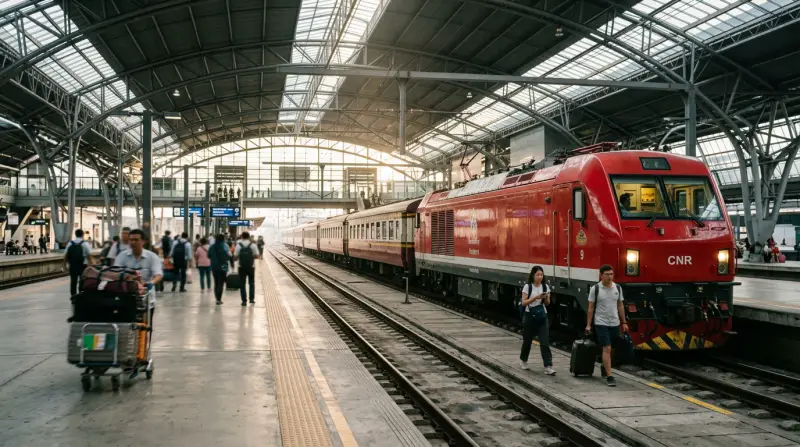
Bang Sue Grand Station, officially known as Krung Thep Aphiwat Central Terminal, has become the primary long-distance rail hub in Bangkok. This modern, large-scale terminal handles most of the intercity and overnight services that were previously centered at Hua Lamphong. It is well connected to Bangkok's MRT (metro) system via Bang Sue station, making it accessible from across the city.
Hua Lamphong (Bangkok Railway Station)
Hua Lamphong is Bangkok's historic railway station and an architectural landmark. While its role has been reduced with the opening of Bang Sue Grand Station, some services — particularly shorter regional routes — may still operate from here. It is advisable to verify your departure station when booking, as services and terminal assignments can change. Always check your ticket carefully for the correct departure point.
Thonburi Station
For the regular local journey from Thonburi, use the Bangkok to Kanchanaburi train guide. Check the current timetable and departure station; excursion services can have different arrangements.
Located on the west bank of the Chao Phraya River, Thonburi Station serves the Southern Line's route toward Kanchanaburi and the famous Bridge over the River Kwai. If you are planning a trip to the Death Railway or the Kanchanaburi area, your journey will likely begin at Thonburi Station.
Since terminal assignments and service configurations can change, always confirm your departure station on your ticket and through our live route search before traveling.
Train Classes and Accommodation Types
The SRT offers several classes of service, each with a different balance of comfort, privacy, and price. Understanding these classes helps you choose the experience that best suits your travel style and budget.
Third Class (Ordinary)
Third class is the most basic and most affordable option. Seating typically consists of padded bench seats, either fixed or reversible. Fans provide ventilation, and windows can be opened. Third class is widely used by local travelers for short to medium distances and offers a genuinely authentic Thai travel experience. It is not typically offered on overnight long-distance services, though availability varies by route.
Second Class (Seat)
Second class seat carriages offer a step up in comfort with individual or semi-individual seats, often in a 2x2 configuration. Some second class seat carriages are air-conditioned, while others use fans. This class is available on both daytime and some overnight services and represents a popular mid-range option for budget-conscious travelers who want more comfort than third class.
Second Class (Sleeper)
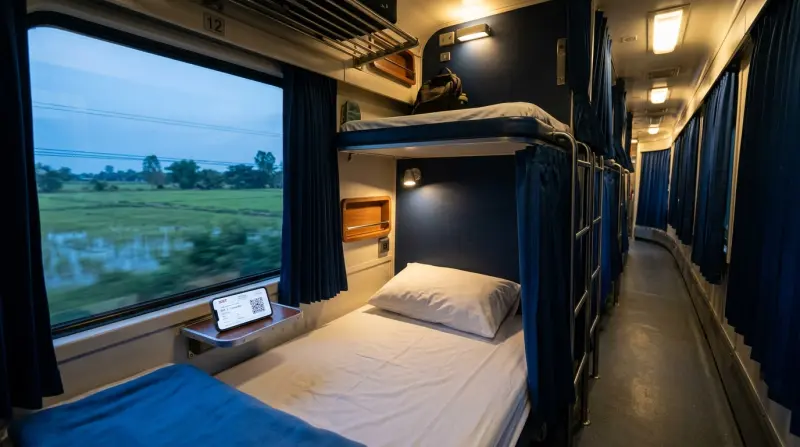
Second class sleeper carriages are the backbone of overnight rail travel in Thailand. These carriages feature convertible berths — seats during the day that transform into sleeping berths at night. Lower berths are generally wider and more comfortable than upper berths. Bedding, including sheets, blankets, and pillows, is provided. Air-conditioned sleeper carriages maintain a cool, controlled environment, while fan sleeper carriages offer a more open-air experience. Overnight services on the Northern, Northeastern, and Southern lines all feature second class sleeper options.
First Class (Sleeper)
First class offers the most private overnight experience on SRT trains. These are typically two-berth compartments with a lockable door, providing genuine privacy. Compartments include air conditioning, bedding, and sometimes a small washbasin. First class sleeper availability is limited and popular, so early booking is recommended.
Special Express and Rapid Services
Beyond the class system, SRT designates its trains by speed category. Special Express trains make the fewest stops and offer the fastest journey times, while Rapid and Ordinary services stop at more stations along the way. The speed category and the class of carriage are two separate factors — a Special Express train can carry second class sleeper, second class seat, and third class carriages, for example.
Fares and availability vary by class, route, and service type. For current pricing and seat availability on any route, use the live search on thailandtrain.org.
How to Book Thailand Train Tickets
Booking train tickets in Thailand as an international visitor has become significantly more convenient in recent years. Here is a step-by-step overview of the booking workflow.
Step 1: Search for Your Route
Begin by entering your origin, destination, and travel date into the search tool. The system will display all available services for that route, including departure and arrival times, journey duration, and available classes. Fares displayed are dynamic and reflect real-time availability.
Step 2: Select Your Service and Class
Review the available options and choose the service and class that best fits your schedule and budget. Pay attention to whether the service is air-conditioned or fan-cooled, and whether it is a seat or sleeper configuration. For overnight journeys, sleeper classes are strongly recommended for comfort.
Step 3: Provide Passenger Details and Complete Payment
Enter the required passenger information (name as it appears on your passport, passport number, nationality) and proceed to payment. Confirmation is typically delivered electronically, and you will receive your booking reference and e-ticket or collection instructions.
Step 4: Prepare for Your Journey
Print or download your ticket before arriving at the station. Have your passport and booking reference ready for inspection. Arrive at the station with enough time to find your platform and carriage.
For a complete walkthrough of the booking process, visit our detailed guide on how to book Thailand train tickets.
Luggage Policy and What to Bring
Understanding the luggage rules and practical considerations for Thai trains will help you travel smoothly.
Luggage Allowances
The SRT does not enforce a strict checked baggage system comparable to airlines. Passengers are generally permitted to bring personal luggage aboard at no extra charge, provided it can be stored in the overhead racks, under the seat, or in the designated luggage areas within the carriage. Large or bulky items may be subject to additional fees or may need to be placed in a dedicated luggage van if available on the service.
As a practical guideline, one or two standard-sized bags per passenger are typical. If you are traveling with unusually large items such as bicycles or oversized equipment, check in advance whether these can be accommodated.
What to Pack for the Train
Consider bringing the following for a comfortable journey:
- Light layers or a sweater: Air-conditioned carriages can be quite cold, especially on overnight services.
- Snacks and water: Vendors often walk through the carriages selling food and drinks, but it is wise to have your own supplies, especially for longer journeys.
- Entertainment: Books, downloaded media, or a journal — cellular signal can be intermittent in rural areas.
- Power bank: Some newer carriages have power outlets, but availability is not guaranteed.
- Earplugs and eye mask: Especially useful for overnight travel.
- Passport: Required for identification and may be checked by conductors.
Boarding and Onboard Experience
Finding Your Train
Bangkok's stations can be busy, so arrive at least 30–45 minutes before your scheduled departure. Platforms are usually announced on display boards, and station staff can assist with directions. Your ticket will indicate your carriage number and seat or berth number — look for these numbers displayed on the outside of each carriage.
Onboard Conductors and Ticket Inspection
Conductors will walk through the train to check tickets and passports. Keep your documents accessible. If you are in a sleeper carriage, the conductor may collect your ticket and return it before your destination stop, or may simply note your berth number.
Food and Dining
Many long-distance trains include a dining or buffet car where you can purchase Thai dishes, snacks, and beverages at reasonable prices. Additionally, vendors at major stations often sell local food through the train windows during stops. This is one of the charming aspects of Thai rail travel — trying freshly prepared meals passed through your window at a brief station stop.
Scenic Highlights by Route
Each route offers its own scenic rewards. The Northern Line passes through lush valleys and mountainous terrain, especially spectacular between Phitsanulok and Chiang Mai. The Southern Line crosses vast stretches of rice paddies and rubber plantations. The section of track near Kanchanaburi on the Thonburi route follows the historic Death Railway along cliff edges and over the famous bridge. Timing your journey for daylight hours on the most scenic segments can enhance the experience considerably.
Tips for International Train Travelers in Thailand
- Book early for popular routes: Sleeper berths on the Chiang Mai, Surat Thani, and Nong Khai routes can sell out quickly, especially during peak travel seasons and holidays. Use our booking guide to secure your seats in advance.
- Verify your departure station: Bangkok has more than one terminal. Double-check whether your train departs from Bang Sue Grand Station, Hua Lamphong, or Thonburi.
- Choose lower berths for comfort: If you are booking a second class sleeper and have a choice, lower berths are wider and easier to access.
- Be prepared for schedule flexibility: Thai trains can experience delays. Build buffer time into your travel plans, especially if you have a connecting flight or onward booking.
- Respect local customs: Thai trains are shared spaces used by locals and tourists alike. Keep noise levels reasonable, remove shoes when using sleeper berths, and be courteous to fellow passengers.
- Check seasonal schedules: Timetable and fare adjustments may occur around Thai public holidays and festivals such as Songkran (April) and Loy Krathong. Always verify availability before traveling.
FAQs: Thailand Train Travel
1. Can international tourists book Thailand train tickets online?
Yes. International visitors can search for routes, check availability, and book tickets through ThailandTrain.org. The platform is designed for English-speaking travelers and accepts international payment methods. For the step-by-step process, see our guide on how to book Thailand train tickets.
2. Which Bangkok station does my train depart from?
Most long-distance intercity services now depart from Bang Sue Grand Station (Krung Thep Aphiwat Central Terminal). Some regional services may still operate from Hua Lamphong, and the Kanchanaburi route typically uses Thonburi Station. Your ticket will state the departure station — always verify it before traveling, as terminal assignments can change.
3. Is it safe to travel by train in Thailand?
Train travel in Thailand is generally considered safe and is widely used by both locals and international visitors. Standard travel precautions apply: keep valuables secure, be aware of your surroundings, and follow the guidance of onboard staff.
4. How far in advance can I book Thailand train tickets?
Booking windows vary depending on the service and the platform used. Advance booking is strongly recommended for sleeper services and popular routes, particularly during peak seasons. Check the live search on thailandtrain.org for current availability and booking windows.
5. Do Thai trains have Wi-Fi and power outlets?
Wi-Fi is generally not available on SRT trains. Power outlets are available on some newer carriages but should not be relied upon. Bring a fully charged power bank for your devices, and consider downloading entertainment and offline maps before boarding.
Start Planning Your Thailand Train Journey
Train travel in Thailand is more than just transportation — it is an experience that connects you with the country's landscapes, culture, and people in a way that no other mode of travel can. From the overnight sleeper to Chiang Mai to the coastal run through southern Thailand, every journey has its own character and charm.
Ready to plan your trip? Explore our complete Thailand train map to see the network at a glance, browse all available routes and services, or head straight to our booking guide to secure your tickets. Fares and schedules are updated dynamically — always check the live search for the most current information before you travel.
ThailandTrain.org is an independent booking service and is not affiliated with, endorsed by, or representing the State Railway of Thailand (SRT). For official information, please visit the SRT directly.
Last verified: August 3, 2026
![Tàu hỏa + Phà từ Bangkok đi Koh Samui: Hướng dẫn đi đêm giá 35 USD [2026]](https://static.thailandtrain.org/images/articles/cover-1773392627501.png?x-oss-process=image%2Fresize%2Cw_800%2Climit_1%2Fformat%2Cwebp%2Fquality%2Cq_75)